Evaluating Pumpkin Pie Clipart: A Guide to Hand-Painted Watercolor Assets for Design Projects
When curating visual assets for autumn-themed projects, the distinction between generic digital graphics and authentic artistic illustrations often determines the final quality of the design. Pumpkin pie clipart serves as a fundamental resource for designers, crafters, and content creators looking to evoke the warmth of the fall season. However, not all clipart is created equal. The market is saturated with vector-based icons and flat illustrations, yet there remains a specific demand for textures that mimic traditional media. A set of six high-quality, hand-painted watercolor pumpkin pie illustrations represents a distinct category within this niche, offering organic imperfections and depth that standard digital drawings frequently lack.
Understanding the value of these assets requires looking beyond the subject matter. It involves evaluating the file format, resolution, artistic style, and versatility across different mediums. Whether you are designing a corporate identity for a bakery or creating a personal planner cover, the choice between watercolor simulations and other graphic styles impacts the viewer's emotional response and the professional perception of the final product.
The Distinctive Appeal of Hand-Painted Watercolor Styles
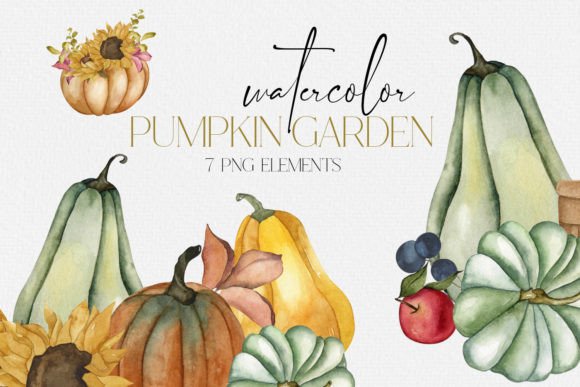
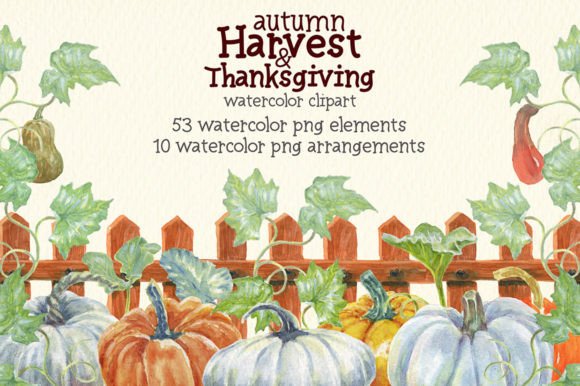
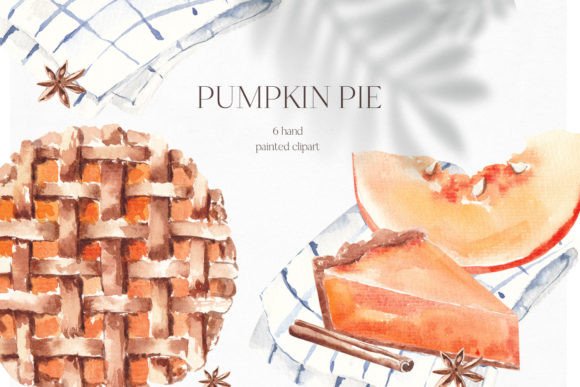
The primary differentiator for this specific collection of pumpkin pie clipart is the hand-painted watercolor aesthetic. Unlike vector graphics, which rely on mathematical paths to create crisp, scalable lines, watercolor illustrations depend on the interaction of pigment, water, and paper texture. When digitized at a high resolution, such as 300 DPI, these images retain the subtle gradients, bleeding edges, and translucent layers characteristic of real paint.
This style offers several advantages for certain design contexts:
- Emotional Resonance: Watercolor conveys softness, nostalgia, and artisanal quality, making it ideal for brands wanting to appear approachable and handmade.
- Texture and Depth: The natural variation in color saturation provides a three-dimensional feel without the need for complex shading techniques.
- Seasonal Authenticity: For fall themes, the organic nature of watercolor complements the rustic elements of pumpkins, spices, and harvest motifs better than sterile, geometric vectors.
However, this style also presents tradeoffs. Because the edges are soft and sometimes irregular, watercolor clipart may not be suitable for designs requiring razor-sharp precision or ultra-modern, minimalist aesthetics. Designers must weigh the desire for an organic look against the need for structural rigidity in their layouts.
Technical Specifications and Format Considerations
A critical factor in evaluating any digital asset is its technical specification. The set of six elements described here comes in PNG format with transparent backgrounds. This is a crucial detail for practical application. Unlike JPEGs, which often include a white box around the image, PNGs allow the watercolor pumpkin pie to be layered seamlessly over any background color, pattern, or photograph.
The resolution of approximately 6"x6" and 7"x5" at 300 DPI indicates that these files are print-ready. This high resolution is essential for physical products. If a designer intends to print these images on large surfaces like party backdrops or tote bags, lower resolution files (typically 72 DPI used for web) would result in pixelation and blurriness. The 300 DPI standard ensures that the fine details of the watercolor brushstrokes remain crisp even when enlarged moderately.
When comparing this to other resources, one must consider scalability. Vector formats (SVG, EPS, AI) can be scaled infinitely without quality loss. Raster formats like PNG, while high quality, have a maximum size limit. For the average user printing on dishes, textiles, or stationery, the provided dimensions are usually sufficient. However, for massive billboard advertising or full-wall murals, a vector alternative might be necessary unless the raster image is upscaled using advanced AI tools, which can sometimes degrade the artistic integrity of the watercolor effect.
Practical Applications Across Mediums
The versatility of high-resolution pumpkin pie clipart allows it to bridge the gap between digital and physical realms. The utility of these six elements extends far beyond simple document decoration.
Physical Product Customization
For those engaged in Print-on-Demand (POD) businesses or DIY crafting, the transparency and resolution of these files are paramount.
- Textiles and Apparel: When printed on T-shirts or tote bags, the watercolor texture mimics the look of hand-screened prints, adding perceived value to the garment.
- Hard Surfaces: Applying these designs to mugs, phone cases, or ceramic dishes requires images that do not look "stuck on." The soft edges of watercolor help the design integrate naturally with the curvature and material of the object.
- Scrapbooking: Whether for physical albums or digital layouts, these elements serve as focal points that anchor photos and journaling cards without overwhelming them.
Digital and Corporate Identity
In the digital space, these assets function differently. For blog design and web headers, the warm tones of the pumpkin pie can establish a seasonal atmosphere immediately.
- Logo Design: Small bakeries, cafes, or food bloggers often seek logos that feel bespoke. A hand-painted pumpkin pie can serve as the central icon for a brand identity, suggesting freshness and homemade quality.
- Planner Covers and Dashboards: The aesthetic fits well with the "cozy productivity" trend, making digital planners and dashboard widgets feel inviting rather than corporate.
- Social Media and Wallpapers: Optimized for screens, these images provide instant seasonal updates for phone wallpapers or Instagram stories, engaging audiences during the autumn months.
Comparative Analysis: Watercolor vs. Vector and Photography
To make an informed decision, it is helpful to compare watercolor clipart against its primary alternatives: vector illustrations and stock photography.
Watercolor Clipart vs. Vector Graphics: Vector graphics are the industry standard for logo design due to their infinite scalability and clean lines. They are best for technical diagrams, modern tech branding, and situations where color consistency across various print methods is critical. In contrast, pumpkin pie clipart in watercolor style sacrifices perfect scalability for artistic texture. If the goal is a sleek, futuristic, or highly corporate look, vectors are superior. If the goal is warmth, tradition, and artisanal charm, watercolor is the better fit.
Watercolor Clipart vs. Stock Photography: Photography offers hyper-realism. A photo of a real pumpkin pie shows every crumb and steam wisp. However, photos can be difficult to integrate into graphic designs without heavy editing to remove backgrounds or match lighting. Furthermore, photos of food can sometimes look too literal or commercial. Watercolor illustrations offer a stylized representation that is recognizable yet artistic. They allow for easier integration into patterns, invitations, and mixed-media collages where a photograph might clash with other design elements.
Decision Factors: When to Choose This Resource
Selecting the right asset depends on the specific constraints and goals of your project. Here are key factors to consider before purchasing or downloading pumpkin pie clipart:
- End-Use Medium: Will the final output be primarily digital or physical? If physical, ensure the 300 DPI resolution meets your printer's size requirements. For large-format printing, verify if the 6-7 inch base size is sufficient or if upscaling is needed.
- Brand Personality: Does the brand or project voice align with "handmade," "rustic," and "soft"? If the brand is bold, loud, and neon, watercolor may feel too subdued.
- Editing Capabilities: While PNGs have transparent backgrounds, changing the color of a watercolor painting is more complex than recoloring a vector. If you need to frequently swap the orange of the pumpkin for blue or green, a vector file might be more efficient unless you are proficient in raster editing software.
- Uniqueness: Hand-painted sets often contain fewer variations than massive vector libraries. With only six elements in this set, the user must be creative in combining them or pairing them with typography and other graphics to create diverse layouts.
Limitations and Best Practices
While versatile, this type of clipart has limitations. The fixed resolution means you cannot enlarge the image indefinitely without losing quality. Additionally, because the style is inherently "messy" with paint splatters and uneven edges, it may not suit designs requiring strict grid alignment or geometric precision.
To maximize the value of these assets, consider pairing them with complementary fonts. Serif or script fonts often enhance the watercolor look, whereas heavy sans-serif fonts might create a stylistic conflict. When using them for merchandise like mugs or t-shirts, always request a proof from your printer to ensure the subtle watercolor gradients translate well to the specific fabric or substrate being used.
In conclusion, a set of high-quality, hand-painted watercolor pumpkin pie clipart is a specialized tool in the designer's arsenal. It excels in scenarios demanding warmth, authenticity, and a touch of human artistry. By understanding the technical specifications and comparing them against vector and photographic alternatives, creators can determine if this resource aligns with their vision for greeting cards, branding, home decor, or digital content. The choice ultimately rests on whether the project benefits more from the precision of digital construction or the soulful imperfection of painted art.