Integrating Watercolor Sleep Animals Clipart into Professional Design Workflows
In the current landscape of digital design and content creation, the demand for authentic, hand-crafted aesthetics continues to rise. Consumers and clients alike are moving away from sterile, vector-perfect graphics in favor of assets that convey warmth, texture, and personality. This shift has made Watercolor Sleep Animals Clipart an invaluable resource for a wide range of professionals, from graphic designers and marketers to small business owners and educators. However, acquiring high-quality assets is only the first step; the true value lies in how effectively these elements are integrated into a broader creative workflow.
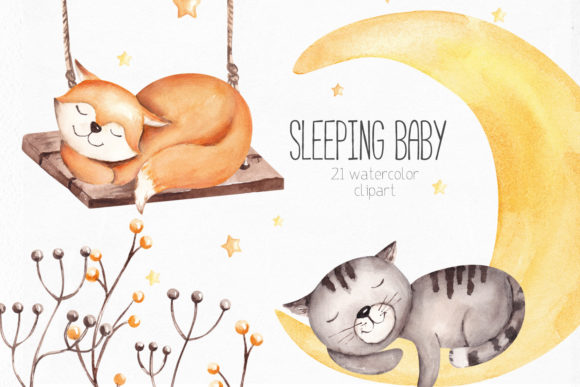
This specific collection, featuring 21 high-quality hand-painted illustrations including a fox, dog, cat, lamb, moon, swing, stars, flora, and flowers, offers more than just cute imagery. It provides a cohesive visual language that can streamline production timelines while elevating the perceived quality of final deliverables. Understanding where and how to deploy these assets within a project lifecycle is essential for maximizing their utility and ensuring consistent brand expression.
Strategic Selection and Pre-Production Planning
Before opening any design software, successful implementation begins with strategic planning. When incorporating Watercolor Sleep Animals Clipart into a project, it is crucial to define the emotional tone and target audience early in the process. The soft, dreamy nature of sleeping animals paired with celestial elements like moons and stars naturally lends itself to themes of calmness, childhood, nighttime routines, and gentle storytelling.
For professionals working on greeting cards and invitations, this pre-production phase involves mapping out the narrative arc of the card. Will the sleeping lamb represent peace? Will the fox on a swing suggest whimsical dreams? By answering these questions beforehand, you ensure that the clipart serves a communicative purpose rather than acting as mere decoration. This approach aligns with E-E-A-T principles by demonstrating expertise in visual storytelling and intentionality in design choices.
Furthermore, considering the technical specifications during the planning stage prevents bottlenecks later. This set includes elements in PNG format with transparent backgrounds at 300 DPI, with dimensions ranging from 2x6 to 7x8 inches. Knowing these constraints allows you to plan layouts for large-format prints, such as party backdrops or tote bags, without worrying about pixelation. It also informs decisions regarding color management, ensuring that the watercolor textures translate accurately from screen to print media.
Integration Across Diverse Product Lines
One of the most significant advantages of a versatile clipart set is its ability to scale across different product categories without losing brand consistency. For entrepreneurs and small business owners, this means a single asset purchase can fuel multiple revenue streams. The Watercolor Sleep Animals Clipart can be seamlessly adapted for printing on various surfaces, including dishes, textiles, T-shirts, mugs, and phone cases.
When adapting these illustrations for textiles and apparel, the workflow requires attention to repeat patterns and placement. The floral and star elements included in the set are particularly useful for creating seamless backgrounds that complement the primary animal characters. A practical implementation tip here is to use the larger elements (like the 7x8 inch files) as focal points on the chest of a T-shirt, while utilizing the smaller flora and stars to create an all-over print for leggings or scarves. This hierarchy creates visual interest and guides the viewer's eye effectively.
Similarly, for home decor items like mugs and dishes, the transparency of the PNG files is critical. It allows designers to place the watercolor elements directly onto colored ceramic mockups without unsightly white boxes surrounding the art. The hand-painted texture adds a tactile quality that resonates well in the home goods market, where consumers often seek items that feel artisanal rather than mass-produced. By maintaining a consistent palette and style across these varied products, businesses can build a recognizable brand identity that customers trust.
Enhancing Digital Presence and Corporate Identity
Beyond physical products, this clipart set plays a pivotal role in digital branding and web design. For bloggers, content creators, and corporate entities looking to soften their image, these illustrations offer a unique way to humanize their online presence. Using the sleeping animals and moon motifs in blog headers, dashboards, and logo designs can instantly communicate values of rest, care, and creativity.
In the context of web design, the workflow involves optimizing these high-resolution images for faster load times without sacrificing quality. While the source files are 300 DPI suitable for print, web usage typically requires compression to 72 DPI or appropriate RGB optimization. The clear, distinct lines of the watercolor style ensure that even when scaled down for mobile views or favicons, the subjects remain recognizable. This adaptability makes them ideal for responsive design frameworks where assets must perform well across devices.
Moreover, these elements are highly effective for planner covers and digital scrapbooking. The productivity community values aesthetics that inspire focus and calm. Integrating the "sleep" theme into planner dashboards can serve as a visual cue for winding down or organizing evening routines. For digital planners sold on platforms like Etsy or Gumroad, the layered nature of the clipart allows users to drag and drop elements easily, enhancing the user experience and increasing the perceived value of the digital product.
Workflow Efficiency and Quality Control
Efficiency in creative workflows often hinges on organization and asset management. With 21 distinct elements in this set, establishing a logical file structure is paramount. Professionals should categorize files by type (animals, flora, celestial) or by potential use case (backgrounds, focal points, accents). This preparation saves considerable time during the execution phase, allowing designers to locate the perfect star cluster or flower bunch instantly rather than scrolling through unorganized folders.
Quality control is another critical aspect of the implementation process. Although these are high-resolution files, different printing methods interact with watercolor textures differently. For instance, sublimation printing on mugs may render colors more vibrantly than direct-to-garment printing on dark fabrics. It is advisable to run test prints on the intended material before committing to a large batch. This step ensures that the delicate gradients of the watercolor do not band or lose detail, preserving the hand-painted charm that defines the collection.
Additionally, consistency in application reinforces professional standards. When using these assets for corporate identity or a series of invitations, maintain uniform scaling and positioning rules. If the fox is always positioned to the left of the text in one document, carry that convention through to social media graphics and packaging. This repetition builds a cohesive visual system that audiences subconsciously recognize, strengthening brand recall.
Long-Term Utility and Creative Expansion
The value of Watercolor Sleep Animals Clipart extends beyond immediate projects. As trends evolve, these timeless themes of nature and rest remain relevant, offering long-term utility for ongoing campaigns. Educators can use them for classroom decorations or sleep hygiene materials, while marketers can leverage them for seasonal campaigns focused on self-care and relaxation.
Creative expansion is also possible by combining these elements with other tools. For example, overlaying the watercolor textures with typography in Adobe Illustrator or Procreate can yield unique logo marks. The flora and stars can be recolored slightly (within reason, respecting the original artistic intent) to match specific brand palettes, provided the license allows for modification. This flexibility ensures that the assets grow with your business, adapting to new markets and audiences without requiring a complete redesign.
Ultimately, the successful deployment of this clipart set relies on a balance of artistic intuition and procedural discipline. By treating these illustrations not just as decorative add-ons but as integral components of a strategic design process, creators can produce work that is both visually stunning and functionally robust. Whether designing a phone wallpaper to soothe a user before bed or creating a party backdrop for a baby shower, the thoughtful integration of these hand-painted elements elevates the final outcome, delivering tangible value to both the creator and the end consumer.