Mastering the Art of Fiber: A Guide to Knitting Elements, Wool, and the Modern Knitter
The tactile world of fiber arts has experienced a profound renaissance in recent years, bridging the gap between ancient tradition and modern digital creativity. At the heart of this movement lies the fundamental relationship between the knitter, the raw material of wool, and the structural knitting elements that transform simple strands into complex textiles. Whether one is manipulating physical yarn on metal needles or curating digital assets for graphic design projects, the principles of texture, pattern, and handmade authenticity remain constant. This exploration delves into the multifaceted nature of knitting, examining how traditional techniques inform contemporary design workflows and why the aesthetic of the hand-drawn knit continues to captivate audiences across various industries.
The Fundamental Components of Textile Creation
To understand the enduring appeal of knitted goods, one must first appreciate the basic building blocks. Knitting elements are not merely stitches; they are the vocabulary of a visual language. The knit stitch, the purl, the cable, and the lace hole each carry specific structural properties and aesthetic weights. When a knitter selects a specific type of wool, they are making a decision that affects drape, warmth, durability, and stitch definition. Merino wool offers softness and elasticity, ideal for garments worn against the skin, while rustic wools provide structure perfect for outerwear or home decor items like rugs and blankets.
The interplay between these elements creates the fabric itself. Unlike weaving, which relies on the intersection of warp and weft at right angles, knitting involves interlocking loops. This loop-based construction gives knitted fabric its characteristic stretch and recovery. For professionals in fashion design and textile engineering, understanding these mechanics is crucial. It allows for the prediction of how a garment will behave over time, how it will react to washing, and how different knitting elements can be combined to create shaped fabrics without cutting or sewing. This intrinsic knowledge separates amateur hobbyists from master artisans who can manipulate wool to defy gravity or mimic intricate architectural forms.
Bridging Physical Craft and Digital Design
In an increasingly digitized world, the demand for authentic, organic textures in graphic design has surged. Designers often seek to inject warmth into cold digital interfaces or print materials by incorporating visuals that evoke the comfort of a hand-knit sweater. This is where the concept of the digital knitter emerges. Creators now utilize high-quality digital assets to simulate the look and feel of physical wool and knit structures without needing to photograph every sample themselves.
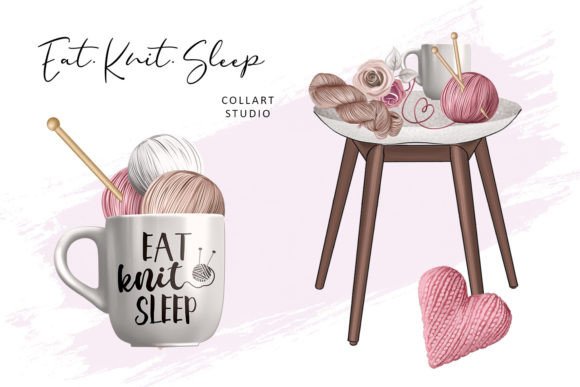
One of the most effective ways to achieve this is through the use of specialized clipart and illustration sets. For instance, a one of a kind hand drawn clipart set provides creators with unique assets that avoid the generic look of stock photography. These collections, such as those featuring knitting elements, allow graphic designers to build custom compositions for invitations, planner stickers, cards, and tags. Because these images are hand-drawn and painted, they retain the irregularities and charm of human creation, which is often lost in vector-generated perfection.
When integrating these assets into a workflow, resolution and quality are paramount. Professional applications require files that can scale without losing detail. High-quality separate PNG image files, typically rendered at 300 dpi, ensure that the texture of the simulated wool remains crisp whether printed on a business card or a large format poster. An approximate size of 3000×3000 pixels (roughly 8×8 inches at print resolution) offers significant flexibility. This allows a designer to isolate a single knit motif for a small sticker or use the full composition as a background pattern for a website header.
Diverse Applications Across Industries
The utility of knitting-themed visuals extends far beyond the realm of yarn shops. Educators, event planners, and small business owners find immense value in these resources. Consider the stationery industry, where the "handmade" aesthetic is a major selling point. A creator designing a line of planner stickers can use knitting elements to categorize sections related to hobbies, self-care, or winter planning. The visual cue of a ball of wool or a pair of needles instantly communicates a theme of relaxation and creativity to the user.
In the context of web and blog design, these assets serve as powerful branding tools. A lifestyle blogger focusing on slow living or DIY projects can utilize original artworks to create a cohesive visual identity. By using a consistent set of hand-painted icons, the blog feels curated and personal rather than assembled from disparate free sources. Furthermore, these images are excellent for creating patterns for paper or fabric. A textile designer might take a digital knit motif, repeat it seamlessly, and send it to a print-on-demand service to create custom wrapping paper or fabric for quilting projects.
The application of these designs in decoupage and mixed media art also highlights their versatility. Artists can print these high-resolution PNGs onto transfer paper or directly onto cardstock to embellish journals, boxes, and frames. The ability to layer these digital cutouts with physical materials like actual wool fibers or dried flowers creates a rich, multi-sensory experience. This blending of the digital and physical realms is a hallmark of modern crafting, where the boundary between the screen and the studio is increasingly blurred.
The Value of Originality and Hand-Drawn Aesthetics
In a market saturated with AI-generated imagery and repetitive vector graphics, the provenance of an artwork matters. Clip arts that are hand-drawn and painted by studios, such as Collart Studio, offer a level of originality that algorithms struggle to replicate. Each stroke carries the intention of the artist, resulting in one of a kind pieces that resonate with viewers on an emotional level. This authenticity is particularly important for businesses looking to establish a boutique brand identity.
Using original artworks ensures that a company's marketing materials do not look identical to their competitors'. When a knitter or a craft store owner uses unique knitting elements in their social media graphics or product packaging, they signal to their customers that they value quality and uniqueness. This alignment of values fosters trust and loyalty. Moreover, hand-painted textures often capture the nuance of light and shadow on wool fibers more effectively than flat digital illustrations, providing a depth that draws the eye.
Technical Considerations for Implementation
For those looking to incorporate these elements into their projects, understanding file formats and resolution is essential. PNG files with transparent backgrounds are the industry standard for this type of work. They allow the knit motifs to be placed over any colored background or textured paper without a white box surrounding them. The 300 dpi specification is critical for print media; anything lower may result in pixelation when printed, undermining the professional quality of the final product.
Workflow efficiency is another key consideration. Receiving separate high-quality files allows for modular design. A user does not need to edit a massive composite image; instead, they can pick and choose specific knitting elements—a skein here, a needle there—to construct a layout that fits their specific needs. This modularity is particularly useful for creating variations of invitations or tags where the core imagery remains consistent, but the arrangement changes to suit different events or products.
Furthermore, the scalability of these images supports both micro and macro applications. The same file used for a tiny planner sticker can be enlarged for a workshop banner, provided the original resolution is sufficient. With dimensions around 3000×3000 pixels, these assets provide a safe margin for cropping and resizing. This flexibility makes them a cost-effective investment for creators who need a wide range of materials from a single purchase.
The Future of Craft-Inspired Design
As we move forward, the intersection of traditional crafts like knitting and digital design shows no signs of slowing down. The desire for tangible, warm, and human-centric aesthetics in our digital lives is a reaction to the sterility of pure technology. Wool, with its natural variations and historical significance, serves as a potent symbol of this connection. By utilizing high-quality, hand-drawn representations of knitting elements, creators can tap into this sentiment effectively.
Whether you are a professional graphic designer, a teacher creating classroom materials, a small business owner packaging handmade goods, or a hobbyist documenting your projects, the tools available today offer unprecedented creative freedom. The ability to mix the timeless appeal of the knit stitch with the precision of digital editing opens up new avenues for expression. It allows the spirit of the knitter to live on not just in sweaters and scarves, but in the very fabric of our visual culture, appearing on screens, papers, and products that touch lives every day.
Ultimately, the integration of these artistic elements into diverse projects underscores a broader trend: the celebration of the handmade in a mass-produced world. By choosing original, high-resolution, and thoughtfully created assets, individuals and businesses contribute to a richer, more textured visual landscape. They honor the legacy of the craft while pushing its boundaries into new, exciting territories. From the cozy warmth of a wool blanket to the crisp clarity of a 300 dpi digital print, the essence of knitting remains a powerful force in art and design.