Unlocking the Power of Memphis Style for Modern Design Projects
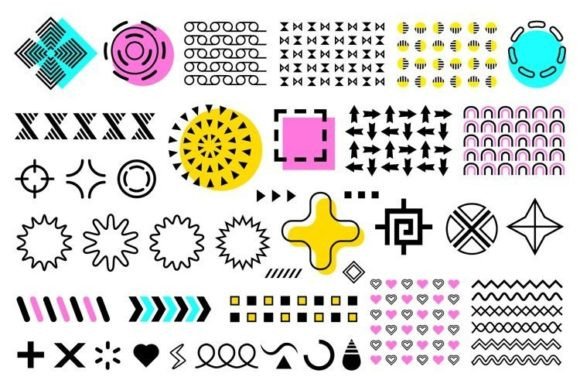
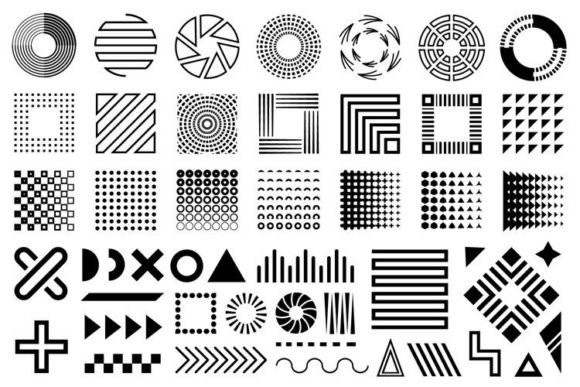
Remember the late 80s and early 90s? That era wasn't just about neon windbreakers and oversized hair; it was a visual revolution known as the Memphis style. Named after the Italian design group founded by Ettore Sottsass, this aesthetic broke all the rules of minimalism. It embraced chaos, bold colors, and quirky geometry. Today, we are seeing a massive resurgence of this look, but with a modern twist. Instead of the chaotic color palettes of the past, many designers are now stripping it back to the essentials: abstract geometric shapes and ornamental shapes in stark black isolated on a clean white background.
This shift creates a versatile toolkit for anyone looking to add personality to their work without overwhelming the viewer. Whether you are a freelancer building a brand identity or a small business owner trying to make your next flyer pop, understanding how to use these Memphis shapes can transform a boring layout into something dynamic and engaging.
Why Black and White Memphis Elements Work Better Than You Think
When people hear "Memphis," they often imagine a riot of clashing colors. While that has its place, the monochromatic approach offers something different: clarity and adaptability. By using design elements in black color isolated on white background, you get the playful energy of the style without the risk of clashing with your existing brand colors.
Imagine you are designing a brochure for a law firm. You want to look professional, but also approachable and modern. Slapping bright pink and lime green squiggles on the page might send the wrong message. However, using subtle waves and seamless patterns in black ink adds texture and movement while maintaining a sophisticated, editorial feel. These elements act as visual anchors, guiding the reader's eye across the page without distracting from the core message.
The beauty of having these assets in a Vector memphis format means you aren't stuck with a fixed size. You can stretch a zigzag line across a billboard or shrink a cluster of dots for a business card, and the lines will remain crisp. This scalability is crucial for professionals who need one set of assets to work across print and digital mediums seamlessly.
Real-World Applications for Creators and Entrepreneurs
So, where exactly do you use these 48 design elements? The possibilities are vast, but let's look at some specific scenarios where these tools solve real problems.
Elevating Marketing Materials
If you run a local coffee shop or a boutique clothing store, your flyers and banners need to stand out in a crowded street or social media feed. A plain text announcement about a summer sale gets ignored. But if you frame that text with energetic geometric shapes and dotted patterns, you create a sense of urgency and fun.
- Flyers: Use large, bold triangles to point directly to your discount code.
- Banners: Create a seamless pattern background that adds depth without making the text hard to read.
- Brochures: Break up long paragraphs of text with small, whimsical icons or squiggles to keep the reader engaged.
Professional Branding and Stationery
For freelancers and consultants, first impressions happen before you even speak. Your business cards and visit cards are tangible representations of your personal brand. Using a minimalist Memphis border or a unique corner element can make your card memorable.
Consider a graphic designer who wants to show creativity but also precision. By using high-resolution JPG files for a quick mockup or the SVG vector files for the final print, they can ensure their card looks sharp. The black-on-white aesthetic ensures that when the card is printed, there are no color matching issues, keeping costs down while maximizing impact.
Digital Presence and Web Design
In the digital realm, loading speed and responsiveness are key. Heavy images can slow down your web pages, hurting your SEO and user experience. This is where the included PNG files with transparent backgrounds become invaluable. You can overlay these design elements on any colored background on your website without worrying about unsightly white boxes around the graphics.
A blogger writing about productivity might use simple wave illustrations to separate sections of an article. An e-commerce site selling tech gadgets could use abstract circles and squares to highlight product features. Because these are vector-based (available in AI and EPS formats), they load quickly and look perfect on both mobile phones and 4K desktop monitors.
Understanding the File Formats: A Practical Guide
One of the most confusing parts of buying design assets is figuring out which file format to use. This collection simplifies that by providing everything you need in one RAR archive. Here is how different users can leverage the specific formats included:
- JPG (HI resolution 300 ppi): Perfect for non-designers. If you are using Canva, PowerPoint, or Word to create a presentation or a quick social media post, just drag and drop these high-density images. They are ready for print immediately.
- PNG (Transparent background): Essential for web designers and app developers. The transparency allows you to layer these shapes over photos, gradients, or colored blocks effortlessly.
- SVG (Vector graphics): Ideal for frontend developers and modern design tools like Figma or Sketch. These files are code-based, meaning they scale infinitely and often result in smaller file sizes for faster websites.
- AI (Adobe Illustrator) & EPS (Corel Draw/Illustrator): These are the power-user formats. If you need to change the thickness of a line, combine two shapes into a new logo, or adjust the curvature of a wave, these editable vector files give you total control.
What to Consider Before You Start Designing
While these Memphis shapes are incredibly useful, successful design comes down to restraint and context. Just because you have 48 elements doesn't mean you need to use all of them in one project.
Know your audience. If you are designing for a conservative financial institution, use the geometric shapes sparingly as subtle textures. If you are targeting a youthful demographic for a music festival, go bold and fill the space.
Maintain hierarchy. Your content is king; these design elements are the supporting cast. Ensure that your ornamental shapes never obscure important information like phone numbers, prices, or calls to action. Use the white space effectively. The "isolated on white background" nature of these assets is a feature, not a limitation. It forces you to think about composition and balance.
Consistency is key. Pick two or three shapes from the set and stick with them throughout your campaign. Using a mix of waves, dots, and triangles across your flyer, website, and business card creates a cohesive visual language that helps people recognize your brand instantly.
Making the Most of Your Design Investment
Ultimately, resources like this Vector memphis pack are about saving time and elevating quality. Instead of spending hours drawing imperfect circles or searching for free clipart that looks generic, you have a curated library of professional-grade assets at your fingertips.
Whether you are an educator creating engaging handouts, a marketer launching a new product, or a hobbyist making invitations for a family event, these tools bridge the gap between amateur and professional. The inclusion of both raster (JPG, PNG) and vector (SVG, AI, EPS) formats ensures that no matter what software you use or what medium you print on, you are covered.
The resurgence of the Memphis style proves that good design is timeless, even when it reinvents itself. By adopting these clean, black-and-white geometric elements, you tap into a trend that feels both nostalgic and thoroughly modern. It's a practical solution for anyone looking to inject energy into their visual communication without sacrificing professionalism.
So, download the archive, open up your favorite design tool, and start experimenting. Try layering a seamless pattern behind your header, or use a bold abstract shape to frame your latest photo. The only limit is your imagination. Thank you for exploring these possibilities, and please enjoy bringing your next project to life with these versatile design elements.